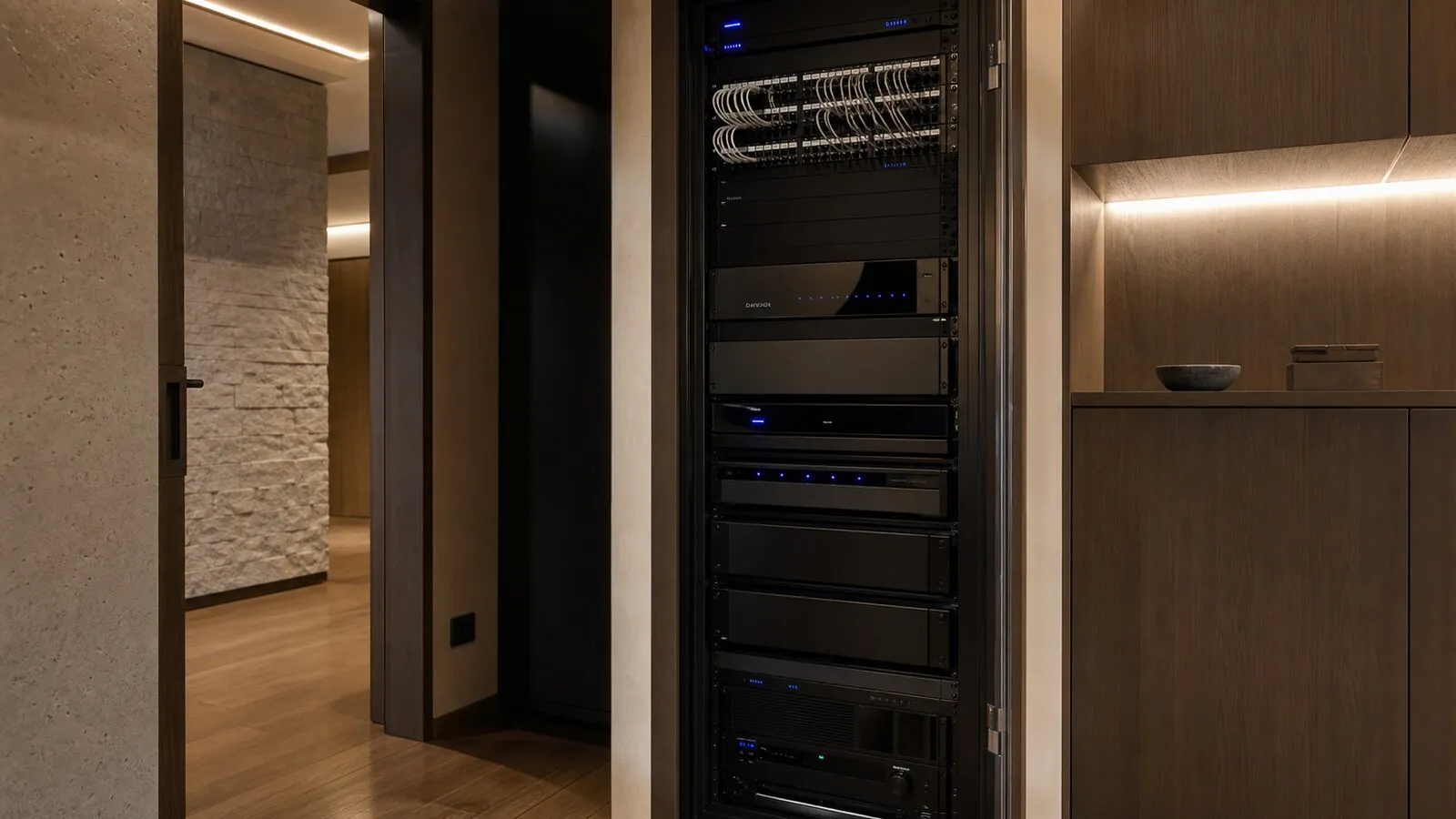
The technical rack is where a smart home becomes an organised system rather than a collection of devices. It may contain the data network, patch panels, switches, automation gateways, power supplies, audio amplifiers, video distribution, UPS equipment and parts of the security infrastructure. When it is designed well, the owner rarely thinks about it. When it is improvised, every maintenance visit becomes slower and every fault harder to trace.
For foreign owners with homes in Italy, the rack is also a governance issue. Local contractors, integrators and property managers may all need to understand it over time. A clean rack protects the value of the installation because it remains serviceable after handover.
The difference often appears months later, not on opening day. A new system may work even if the rack is hard to read, but the weakness emerges when a switch is replaced, a new source is added or a fault occurs while the owner is abroad and guests are in the house.
Why the technical rack affects the whole home
Many domestic systems depend on the rack even when the user does not see it. If the network is unstable, automation feels unreliable. If amplifiers overheat, audio zones become unpredictable. If power supplies are messy, a small intervention can take longer than necessary. If cables are not labelled, a simple change becomes detective work.
A well-planned rack makes the property legible. Each cable has a destination, each port has a purpose and each device can be replaced without dismantling the installation. This does not mean overspecifying everything. It means leaving reasonable room for maintenance, heat management and future growth.
Location matters. A central rack can simplify distribution, but it must be compatible with noise, heat and access. A secondary rack may be appropriate for an annex, pool area or remote floor. The right answer depends on the property, not on a universal template.
The management model should influence the layout. A primary residence, a seasonal villa and a property with staff do not have identical service needs. The more people may be involved in maintenance, the more the rack must communicate clearly through labels, diagrams and physical order.
Space, location and ventilation
Rack space is not only the number of units occupied on day one. There must be room for patch cords, cable management, power distribution, possible future switches, new gateways and additional AV equipment. A rack that is full at handover is already limiting the home.
Ventilation requires the same discipline. PoE switches, amplifiers, UPS units and processors generate heat in different ways. In some properties a well-ventilated plant room is enough; in others, fans, extraction or more structured cooling may be required. There is no single formula, but ignoring heat is one of the most common causes of long-term instability.
Access is also a technical requirement. The rack should open properly at the front and, where appropriate, be inspectable from the rear. It needs lighting, working space and a location that does not force technicians to work inside delicate joinery or reception rooms during a fault.
Network, AV and automation in the rack
The network is often the core of the rack: incoming data lines, patch panels, switches, links to access points, desks, TVs, security systems and automation equipment. Switch sizing, PoE capability and logical segmentation should be chosen according to the number of devices, critical services and expected maintenance model. Designing this is very different from setting up a consumer router.
Audio and video add further requirements. Amplifiers, processors and distribution equipment need space, heat dissipation, tidy cabling and sometimes dedicated links to sources or zones. A cinema room, main living area, guest rooms, terraces and wellness spaces will not all have the same needs.
Automation brings gateways, power supplies, supervisors and interfaces between systems. Order is essential. An integrated home should still be understandable years later, when owners, staff, devices or service companies have changed.
Power, continuity and cable order
Power is part of rack design, not a final accessory. Dedicated lines, protection, sockets, internal distribution and UPS coverage should be considered according to the equipment and the criticality of services. A UPS may be recommended for network, security or control equipment, but runtime and connected loads depend on the project.
Cable order is not just visual neatness. It reduces errors, simplifies diagnostics and makes future changes faster. Correct-length patch leads, clear labels and separation between power, data and signal paths help preserve the system over time.
The rack also needs documentation: a logical diagram, port numbering, cabling photographs and essential notes for maintenance. Without documentation, even a visually attractive rack remains fragile.
Controlled growth is another design goal. New sources, a different internet connection, expanded audio or security updates should not be added wherever space happens to remain. A rack with a clear logic can evolve without losing readability.
Checklist for a maintainable rack
- Decide rack location before joinery and technical-room finishes are final.
- Leave free space for patching, ventilation and future expansion.
- Organise network, power, AV and automation rather than mixing everything.
- Evaluate UPS and PoE according to critical services, not habit.
- Label cables, ports and power connections clearly.
- Deliver an updated diagram with the completed installation.
Lastech treats the rack as core infrastructure, not as a cabinet of equipment. When a property also includes automation scenes, multiroom audio or a private cinema, coordination with Elysium and NvisionGroup keeps comfort, reliability and maintenance aligned.
Continue reading
Related articles on NvisionGroup:
- Electrical systems and home automation: why they must be designed together
- Professional Wi-Fi for villas and penthouses: coverage, roaming and stability
- Structured cabling during renovation: what to prepare


