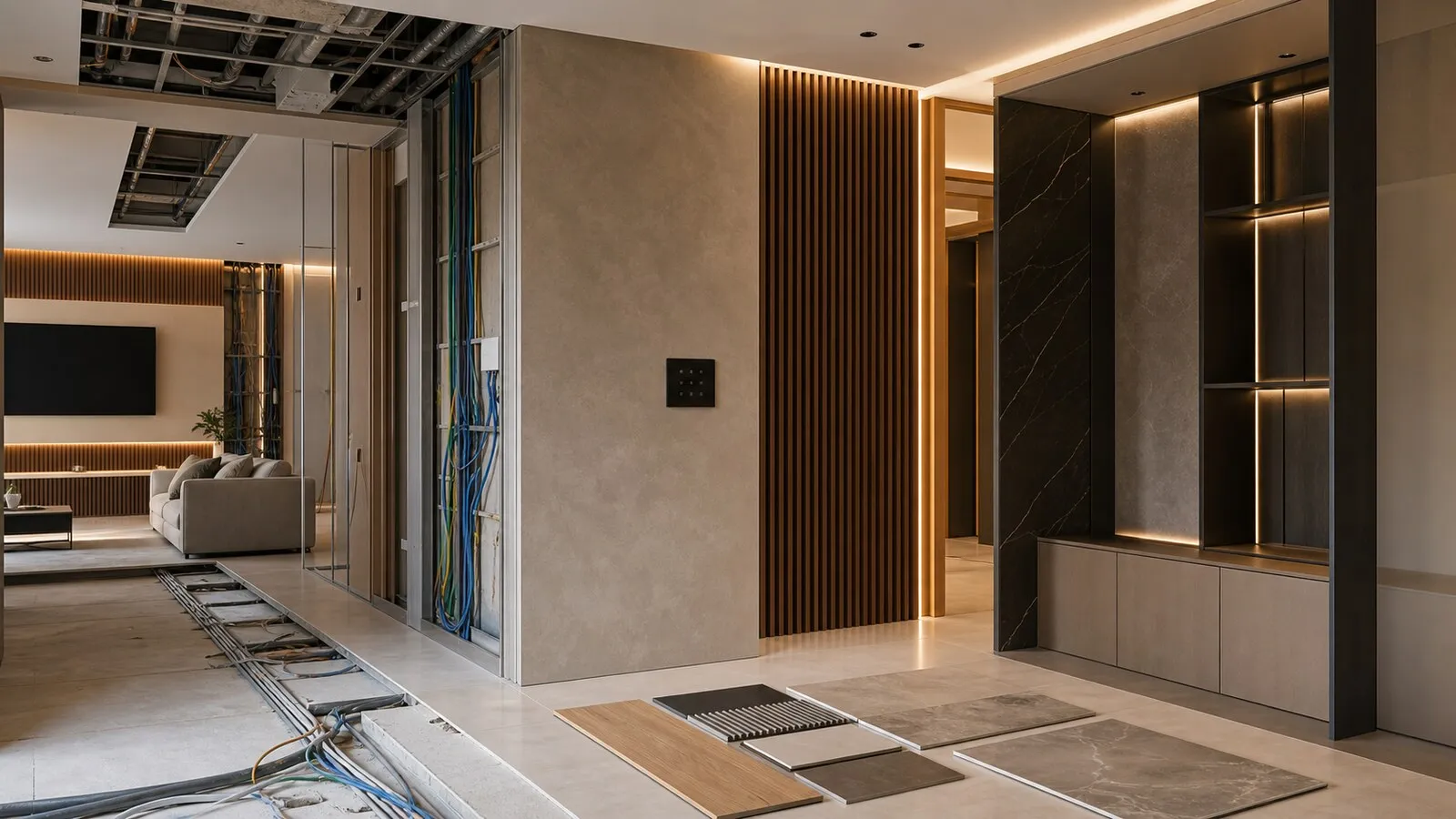
Enhancing a property with lighting and automation does not mean adding devices everywhere. It means choosing upgrades that improve comfort, spatial clarity, ease of use, security and perceived quality during both a viewing and daily life. There is no automatic link between installed technology and a fixed increase in market value. Every property, location and buyer is different. There is, however, a clear difference between coordinated improvements and random gadgets.
For international owners preparing a home in Italy for sale, long-term rental or renewed family use, the question is where technology makes the home easier to understand and more pleasant to live in. GTS Casa can help frame this property-level decision and, when needed, involve group specialists in lighting, automation, electrical systems and audio-video.
The issue: investing without raising perceived value
Many technology upgrades are invisible to a visitor unless the space communicates them naturally. A complex system that is difficult to use can create hesitation. Too many touchscreens, apps, technical scene names and duplicated controls make the home feel demanding. A few well-chosen functions can make it feel orderly, contemporary and ready.
Enhancement should start where the property speaks most clearly: entrance, living area, kitchen, principal suite, terrace, garden, evening routes, study and guest areas. Lighting and automation influence the first experience in these spaces. Flat light can weaken expensive materials. A hard-to-reach manual blind can feel inconsistent. Weak Wi-Fi during a technical visit undermines the idea of a ready home.
The rule is to invest where the benefit is understandable. If the owner needs ten minutes to explain why a system matters, it may not be the first priority. If an “Arrival”, “Dinner” or “Night” scene immediately shows order, comfort and control, technology supports perceived value without exaggeration.
Architectural lighting and scenes
Lighting is often the most legible improvement. The goal is not to multiply fixtures, but to build layers: general light, accent light, task light, LED details, pathway light and exterior light. In a premium property, lighting should reveal materials, depth and routes, not simply make rooms bright.
Dimming is essential. A living area that moves from cleaning to dinner, reading to guests, communicates flexibility. A corridor with night lighting avoids harsh switching. A terrace with soft scenes becomes a real evening room. Elysium can integrate these levels into simple controls, while Lastech supports the electrical base and predispositions.
Scenes should be few and clear. Arrival, Day, Evening, Dinner, Night and Away are easier than technical presets. Each scene should be adjustable and understandable. The home should feel easy to live in, not dependent on a manual.
Comfort, security and ease of use
Automation that enhances a property removes friction. Motorized blinds help manage privacy, temperature and protection of interiors. Zoned climate control can make the home feel more considered. Remote access is useful for second homes and properties with staff, but it should be paired with intuitive physical controls.
Security is sensitive. Intercom, alarm, cameras and access control should communicate order, not excessive surveillance. A buyer should understand which entrances are protected, how guests and maintenance visits are managed and which functions remain simple in everyday use.
Ease of use also means maintenance. A home full of undocumented devices can worry a buyer. A home with an organized rack, labelled panels, essential apps and clear instructions communicates care. That does not guarantee a higher price, but it narrows the gap between aesthetic promise and technical quality.
Visible upgrades and hidden infrastructure
Visible upgrades are immediately perceived: lighting, controls, blinds, scenes, audio and access security. Hidden infrastructure makes them reliable: cables, panels, network, power supplies, rack, protection and documentation. Investing only in visible effects creates fragility. Investing only in hidden infrastructure may not be understood by the market.
The point is balance. If a home has strong finishes but dated systems, the first priority may be technical coherence. If the infrastructure is solid but the lighting weakens the rooms, lighting design may lead. If the home is sold furnished, controls and scenes need to match the real layout.
For properties with cinema, wellness or distributed audio potential, predisposition may be wiser than a full installation. Cinema in Casa can indicate which spaces deserve specific evaluation, avoiding generic promises for rooms that lack suitable proportions or isolation.
Method for setting priorities
Use a practical decision framework:
- Identify the rooms that shape first impression and everyday use.
- Separate necessary, desirable and deferrable upgrades.
- Check whether the electrical and network base can support the planned functions.
- Prefer clear scenes and physical controls over demonstrative features.
- Document systems, credentials, drawings and maintenance for the future owner.
- Avoid fixed value promises; speak in terms of comfort, perceived quality and readiness.
Property enhancement is about making the home more coherent and legible. GTS Casa can help connect the improvement strategy to the positioning of the property, while the NvisionGroup technical companies turn priorities into a realistic project.
Continue reading
Related articles on NvisionGroup:
- Evaluating a villa before buying: technical signals to check
- Is the home ready for cinema and automation? A checklist before buying or renovating
- Milan penthouse with integrated technology: what changes in the project