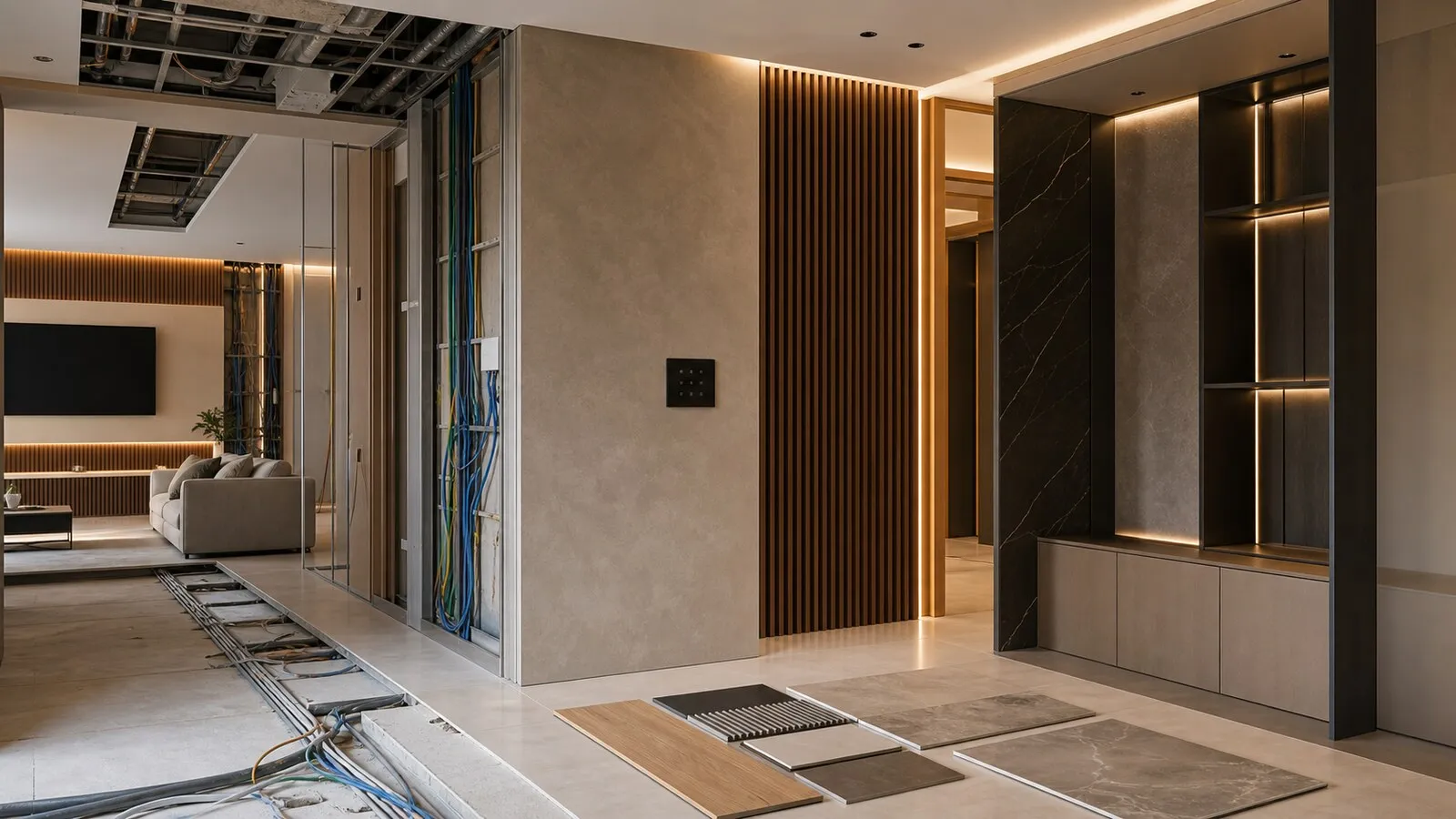
Checking whether a home is ready for cinema and automation before buying or renovating prevents expensive decisions from arriving too late. An empty room is not automatically suitable for a private cinema. A working electrical system is not necessarily ready for lighting scenes, motorized blinds, multiroom audio, integrated security and remote control. Existing Wi-Fi does not mean stable coverage across the whole property.
For international buyers considering property in Italy, this check is particularly useful. The viewing may focus on architecture and location, while the future project may involve contractors, technical specialists and remote management. GTS Casa can help frame the property evaluation and bring in NvisionGroup specialists when the purchase depends on cinema, automation or systems feasibility.
The issue: buying or renovating without checking technology
Many owners imagine technology as a layer that can be added at any time. Sometimes it can: wireless devices, retrofit products and adaptable systems exist. In premium homes, however, the quality of integration often depends on earlier decisions: cable routes, ceiling depths, rack position, acoustic isolation, blackout, panels, power supplies, technical spaces and access.
If these checks happen only after purchase or demolition, options can narrow. The best cinema room may become impossible because it borders quiet bedrooms. Motorized blinds may require work on finished window details. Outdoor audio may be limited because there are no routes to the terrace. Wi-Fi may be patched with repeaters instead of designed with wired access points.
The checklist brings order to the decision. It does not replace professional inspections or tell the buyer whether to purchase. It helps identify the questions to ask before assuming the home is ready.
Spaces, heights and noise for the cinema room
A private cinema room depends on geometry, proportions, light control and its relationship to neighbouring rooms. A basement may look ideal but have low ceilings, humidity, plant noise or awkward access. A room near bedrooms may have the right size but create disturbance. A large living room may host an elegant home theater, but with compromises on acoustics, blackout and furniture layout.
First, check volume. Screen, speakers, subwoofers, seating, circulation and acoustic treatment all need real space. Second, check noise: outside noise into the room and cinema sound toward the rest of the home. Third, check light: windows, glazed doors, reflections and blackout possibilities. Cinema in Casa can turn these observations into a more precise technical assessment.
Cable routes are just as important. Projector, screen, speakers, rack, scenic lights and controls should work without visible cables or improvised devices. In a finished home, understanding where cables can pass may matter more than choosing equipment brands.
Network, panels and cable routes
Automation, cinema, audio, video surveillance and access control depend on network and power. A ready home should have organized panels, technical spaces, backbone routes, reachable conduits and a logical place for a rack or equipment cabinet. If every function starts from a different corner, future maintenance becomes difficult.
The network should be wired where it matters. Access points, smart TVs, touch panels, cameras, intercoms, workstations and audio streamers should not all rely on Wi-Fi. In villas, penthouses and homes with thick walls, a designed network is often the difference between stable technology and constant correction.
Lastech can read the state of electrical systems, network, security and predispositions. This is useful when the project includes several integrated systems. It is not enough to know that power exists; the buyer needs to understand how the property can be served, expanded and maintained.
Automation, security and predispositions
A home ready for automation has clear functions, not only devices. Dimmable lighting, blinds, climate, access, security, audio and scenes should be coordinated through physical controls, app and supervision where appropriate. Elysium works at this level: turning separate systems into a coherent living environment.
Predispositions should be checked one by one. A motorized blind needs power in the right place. A keypad needs a position that makes sense with doors and furniture. A camera needs network, power, field of view and support. A touchscreen needs box depth, power and network. A generic empty conduit without a documented destination is not enough.
Security should remain robust. Intrusion, cameras, access control and intercom can communicate with automation, but should not depend on fragile or undocumented logic. Buyers should understand how users, guests, maintenance staff and remote access are managed.
Checklist before signing or demolishing
Before committing to the property or beginning work, verify:
- Is there a room genuinely suitable for cinema, home theater or audio in terms of volume, noise and blackout?
- Are cable routes available for screen, speakers, rack, projector, lights and controls?
- Do panels, rack and technical spaces have order, spare capacity and access?
- Does the network include wired points and access points in critical areas, including outdoors?
- Are blinds, lights, climate, security and access predispositions specific and verifiable?
- Is system documentation available and understandable?
- Can the desired functions be built without damaging finishes or furniture already chosen?
A ready home is not necessarily a finished home. It is a home that can absorb the project without unnecessary force. GTS Casa helps buyers ask these questions before the emotion of purchase or renovation hides the technical conditions that will shape daily life.
Continue reading
Related articles on NvisionGroup:
- Enhancing property value with lighting and automation: where to invest
- Evaluating a villa before buying: technical signals to check
- Milan penthouse with integrated technology: what changes in the project