For an international buyer renovating or furnishing a villa in Italy, multiroom audio is rarely just a lifestyle accessory. It becomes part of how the property is used: breakfast in the kitchen, guests on the terrace, children by the pool, a quieter evening in the master suite, staff preparing the house before arrival. The system must feel effortless, even when the property is large, seasonal or managed from abroad.
Good multiroom design is not a speaker-count exercise. It is a decision about zones, sources, cabling, amplification, network reliability and control. The best systems disappear into the architecture, but only because the technical choices were made early and coordinated with the renovation.
Why multiroom audio must be designed by zones
A zone is an area that should be controlled independently. It may be a single room, but not always. An open kitchen and living area may work as one coordinated zone, or as two separate zones if people use them differently. A terrace may need separate dining and lounge areas. A pool house, spa or guest apartment may require its own logic because it is used at different times by different people.
Designing by zones keeps the system aligned with real life. Who will control the music? Will guests need simple access? Will staff prepare scenes before the owner arrives? Should some spaces be excluded to preserve quiet? These questions matter more than choosing a brand at the start.
This approach also avoids a common mistake: assuming that more speakers automatically mean better sound. A well-defined zone with appropriate speakers can be more useful than a dense but confusing layout. Conversely, one very large zone may be inconvenient if family members or guests want different content in different areas.
Sources, rooms and usage habits
Sources can include streaming services, TV audio, turntables, music servers, cinema rooms, guest inputs or systems dedicated to wellness areas. Not every source needs to be available everywhere. Some belong in principal rooms; others should remain local to a cinema room, study or event space.
Italian villas often combine historic structure, contemporary interiors and outdoor living. Stone walls, thick floors, vaulted ceilings, garden loggias and service areas influence both acoustics and cable routes. A design meeting should therefore start with usage scenarios: arrival from abroad, a weekend with guests, a rented period, a dinner served outdoors, a quiet workday in the study.
For foreign owners, remote support and clear user permissions are especially important. The owner, family, guests and property manager may need different levels of control. The system should be elegant, but also understandable when the owner is not on site.
It is worth documenting these habits before the detailed technical design begins. A short usage brief can prevent later confusion: which areas are used together, which spaces must remain quiet, which guests can control music and which scenes should be prepared by staff before arrival.
Speakers, amplification and cabling
Ceiling speakers, wall speakers, invisible speakers, outdoor speakers and freestanding models serve different purposes. The right choice depends on architecture, finishes, room height, reverberation and the expected listening level. A marble bathroom, a timber-lined study and an open terrace do not behave the same way.
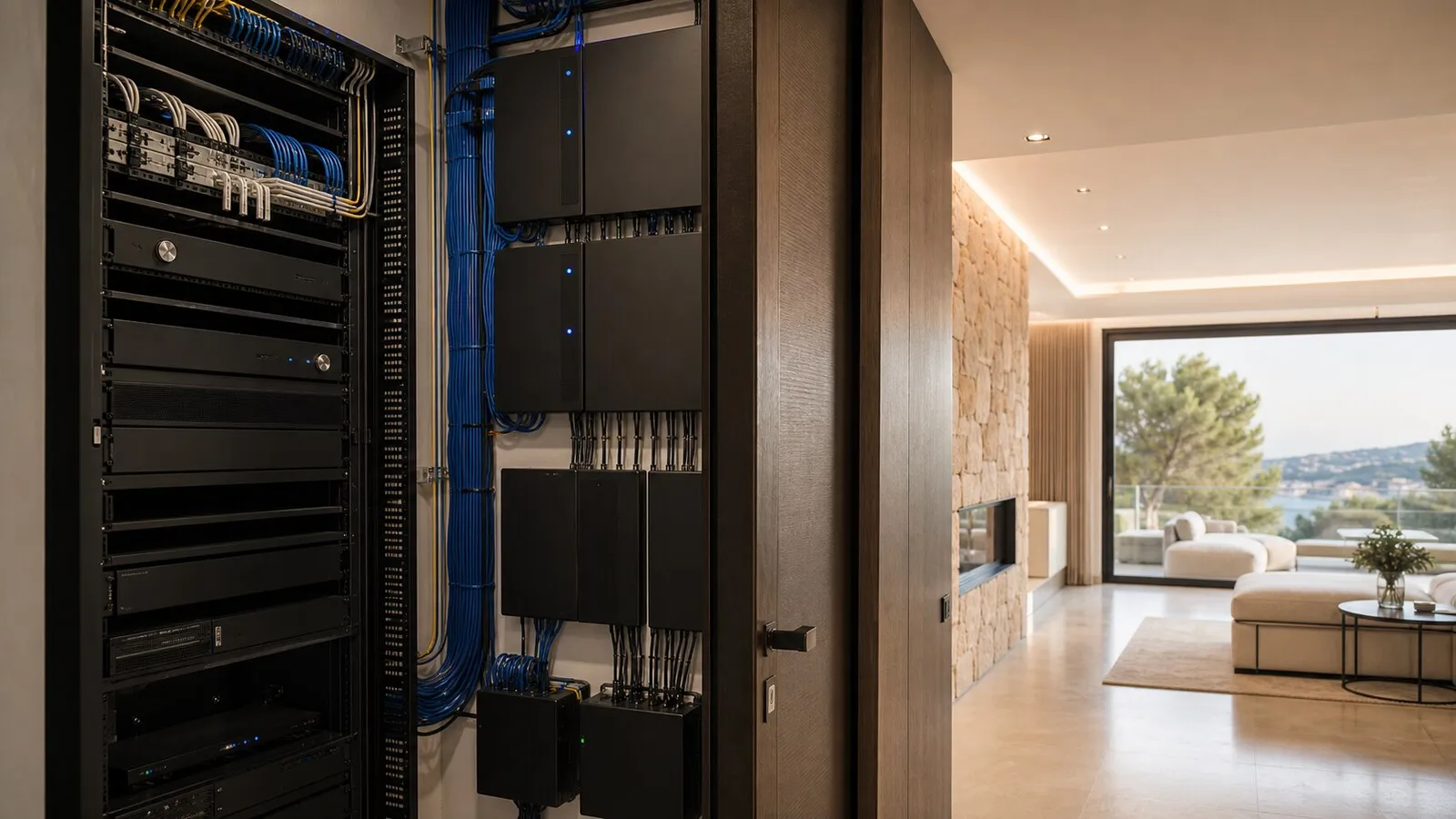
Amplification may be centralised, distributed or hybrid. A technical rack can make maintenance easier, but not every zone has to follow the same model. In some projects it is sensible to route speaker cables back to the rack; in others, network and power near the zone are the better foundation. The decision should be coordinated with electrical design, furniture, inspection access and future servicing.
The same caution applies to cabling categories. Cat 6A, local fibre or dedicated audio cabling can be sensible recommendations in many premium homes, but they are not universal obligations. The real requirement is a documented, maintainable infrastructure that leaves appropriate room for growth without overcomplicating the property.
Network, control and automation integration
Modern multiroom audio depends heavily on the network. Stability does not come from relying on the standard router supplied by an internet provider. It comes from a designed network with suitable switches, wired access points where required, possible PoE for compatible devices and clear management of the services that depend on the network.
Automation should make audio easier, not more technical. A keypad can start a dinner scene. A touch panel can manage the main zones. An app can offer deeper control to the owner. The best interface strategy combines physical controls, visual interfaces and light automation, so people are not forced to use a phone for every basic action.
It is also useful to separate infrastructure design from final product selection. First define zones, network, power, rack space, control points and cabling. Then choose brands, models, finishes and services. This protects the villa from being tied too early to one technology cycle.
Checklist for a scalable system
- Map audio zones by how the property is used, not only by room names.
- Decide which sources should be available in each zone.
- Coordinate speakers with ceilings, joinery, lighting and outdoor areas.
- Design the network and rack as part of the audio system.
- Provide physical controls in frequently used spaces, not only app control.
- Document cables, ports and zone logic for future maintenance.
Elysium designs the audio experience, Lastech builds the technical infrastructure, and NvisionGroup coordinates the conversation with architects, contractors and property managers in Italy. For an international owner, that coordination is often what turns a complex system into a home that is easy to enjoy.
Continue reading
Related articles on NvisionGroup:
- Control4, KNX and Matter: practical differences for a smart home
- Home automation for luxury villas in Italy: what to design before construction
- KNX for premium smart homes: when it makes sense


