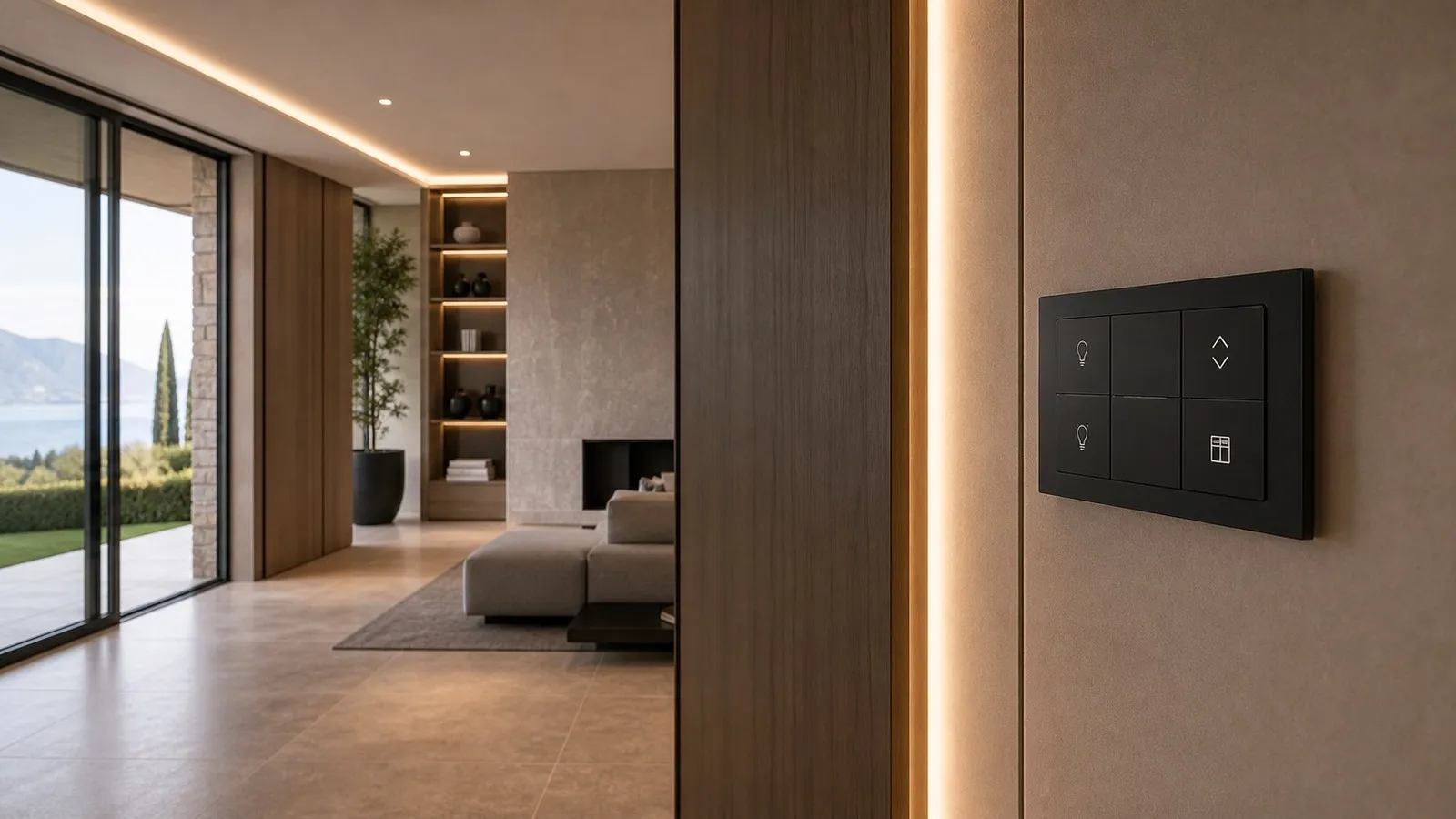
KNX is often mentioned in premium home automation as if the name itself guaranteed quality. It does not. KNX is a worldwide standard and professional ecosystem for smart homes and building automation, but the result still depends on design, cabling, commissioning, documentation and maintenance. A poorly planned KNX installation can disappoint; a well-planned one can provide a stable infrastructure for years.
For foreign buyers renovating or building a villa in Italy, KNX can be a strong option when lighting, climate, blinds and technical functions need to be reliable, serviceable and coordinated with construction. It is less compelling for a small set of isolated smart devices or for projects where no one is prepared to design the system properly.
The issue: choosing a protocol without understanding the system
The question “Should we use KNX?” should come after a more practical question: what must the house do? A villa with dozens of lighting circuits, motorized blinds, underfloor heating, fan coils, ventilation, gates, garden areas and a plant room has different requirements from a small apartment with a few smart bulbs.
KNX is designed for professional building automation. It uses a dedicated bus and a structured approach to connect sensors, buttons, actuators and interfaces. The ecosystem includes many manufacturers and certified products, but that does not mean every smart product or consumer platform is KNX compatible. Compatibility must always be checked for the exact devices and gateways in the project.
In a premium residence, KNX often works best as the infrastructure layer. Other systems may handle audio-video, visual interfaces, remote apps, voice assistants or consumer devices. The important point is to define the role of each layer before installation begins.
Reliability, bus wiring and distributed logic
One reason KNX is selected for high-end homes is distributed logic. Many local functions do not need to depend on a single consumer hub or cloud service. A wall button, sensor and actuator can perform their planned function through the bus when the system has been designed that way. This is valuable in villas used by families, guests and staff, where basic controls must remain predictable.
The benefit comes with responsibilities. KNX wiring, panel space, power supplies, bus topology, addressing, actuator selection and programming all require professional planning. A neat technical panel with spare capacity is not cosmetic; it makes later service possible. Documentation matters because a premium home may be maintained by different professionals over its life.
Security should be treated as part of the same design. KNX IP Secure has been recognized as EN ISO 22510 for secure KNXnet/IP communication, which is relevant where KNX systems communicate over IP. That fact does not remove the need for network segmentation, credential management, secure remote access and update policies.
Lights, climate, blinds and supervision
Lighting is one of the strongest reasons to consider KNX. Dimming, relays, DALI gateways, sensors, wall controls and scenes can be organized with precision. The value is not only switching circuits; it is creating reliable scenes for arrival, evening, dinner, night, cleaning and security.
Climate control needs careful coordination with Italian building systems. Underfloor heating, heat pumps, fan coils, air conditioning, ventilation and dehumidification all behave differently. KNX can integrate thermostats, sensors, actuators and interfaces, but the final comfort depends on the HVAC design. Automation should make the thermal system easier to use, not fight it.
Blinds and shading are also important in villas with large glazing and strong sun exposure. Automated shading can improve comfort, privacy and protection of interiors, but it needs limits for wind, access doors, safety and manual override. Good supervision gives the owner and property manager visibility without making every adjustment dependent on an app.
Integration with AV and apps
KNX is not an audio-video platform. It can integrate with control systems that manage home cinema, multiroom audio, displays, sources, remotes, touchscreens and apps. This distinction helps avoid unrealistic expectations. KNX may run the building functions while another professional control layer presents the experience to the user.
The app should not become the only interface. In a luxury villa, guests should be able to use lights and blinds without installing anything. Staff should have clear local commands for service routines. Owners should have remote supervision when travelling, but key everyday functions should still work locally.
Consumer smart devices can coexist with KNX, especially for non-critical additions, but they should be evaluated carefully. Some are useful; others are not suitable for functions expected to last a decade. The design question is not “Can it be connected?” but “Should this function belong to the professional infrastructure?”
Framework for deciding whether to use KNX
Use this decision framework before committing:
- List the infrastructure functions: lighting, blinds, climate, sensors, technical alarms and wall controls.
- Count real complexity: circuits, zones, floors, guest buildings, outdoor areas and panels.
- Decide which functions must work locally without cloud services or internet.
- Check construction timing, cable routes, panel space and installer capability.
- Define how KNX will integrate with AV control, apps, voice and consumer devices.
- Require project files, backups, device lists and a support plan.
If the project values reliability, wiring, professional maintenance and long-term serviceability, KNX can be a sensible foundation. Elysium evaluates it as part of the whole villa system, not as a badge. The goal is a home that remains understandable and maintainable after the handover.
Continue reading
Related articles on NvisionGroup:
- Control4, KNX and Matter: practical differences for a smart home
- Home automation for luxury villas in Italy: what to design before construction
- How much does home automation cost in a luxury villa: a guide to real budgets


