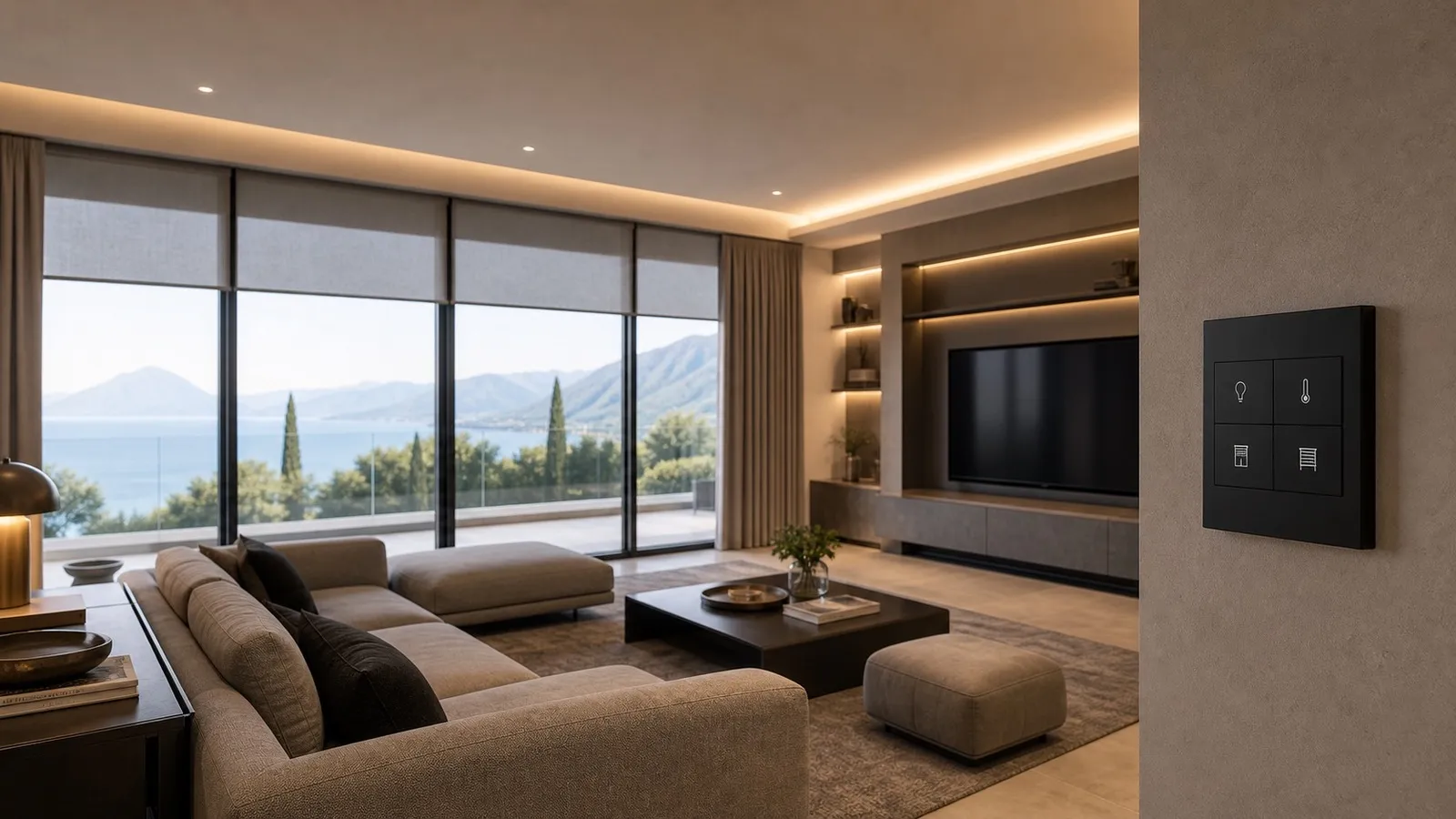
Lighting, climate and blind scenes are the part of smart home automation people actually use every day. They are less dramatic than a voice demo, but they decide whether a home feels calm or annoying. A good “Arrival” scene can set the right lighting, adjust temperature and open selected blinds. A bad automation changes things unexpectedly and makes the owner distrust the system.
For international buyers planning a residence in Italy, these scenes should be designed around the building, the climate and the way the property will be used. A villa in Tuscany, a Milan penthouse and a lakeside home do not have the same sun exposure, guest pattern or heating behavior. Automation needs to be local and specific.
The issue: too much automation and too little usefulness
Many smart homes become complicated because they start from features rather than routines. Sensors, schedules, geolocation, voice control and app triggers are added because they are possible. No one checks whether the final behavior feels natural. The result is lighting that changes at the wrong time, blinds that move when someone wants the view, or climate settings that need constant correction.
A useful scene has a clear purpose. “Dinner”, “Movie”, “Night”, “Away”, “Cleaning” and “Guest terrace” describe real moments. Each moment has a priority: atmosphere, privacy, energy use, safety, service or comfort. When the priority is clear, the automation logic becomes simpler.
Simplicity must be designed. One button may trigger several actions, but the user should understand what will happen. Important actions should be reversible. Staff and guests should have separate controls. The best system does not ask people to understand the technology behind it.
Routines, schedules and occupancy
Daily routines are the starting point. In the morning, the home may raise selected lights, open blinds toward the garden, keep privacy near the road and prepare the kitchen or breakfast area. In the evening, it may lower light levels, close certain shades and set a more comfortable night temperature. During long absences, it may reduce energy use and keep security functions active.
Schedules alone are not enough. A second home in Italy may be empty for weeks, then full of guests for a holiday. Weekdays, weekends, events, staff visits and maintenance days all create different patterns. Occupancy sensors can help, but they must be interpreted carefully. A still person reading in a living room is not the same as an empty room.
Some actions can be automatic, such as pathway lighting after dark. Others should ask for a deliberate command, such as closing all blinds or activating night mode. In a premium residence, automation should support decisions rather than remove control from the people living there.
Natural light, artificial light and shading
Natural light is one of the first materials to manage. Large glazing, different orientations and valuable interiors need shading strategies. The goal is not to move every blind together. It is to balance view, privacy, heat gain, glare and protection of furniture or art.
Artificial lighting should be organized by activity. A kitchen needs working light, evening light and cleaning light. A living room may need reading, dinner, conversation, cinema and night pathway scenes. Exterior lighting should separate arrival, security, garden ambience and maintenance. Dimming and grouping should match the lighting design, not just the wiring plan.
Shading is especially sensitive in bedrooms, cinema rooms and spaces with strong afternoon sun. Scenes should consider reflections, safety, open doors, wind and the position of people. A motorized blind is not just a visual effect; it is a mechanical system that needs sensible limits and manual override.
Climate, energy use and perceived comfort
Comfort is not only a thermostat number. Humidity, radiant temperature, air movement, underfloor heating inertia, solar gain and room use all affect perception. A well-designed smart home makes these variables easier to manage without making the villa feel like a technical experiment.
Scenes can coordinate climate and shading. In summer, partial shading before peak sun can reduce heat gain and glare. In winter, opening selected blinds can use solar gain where appropriate. But the logic must fit the building. A stone farmhouse, a new seafront villa and an apartment in Milan behave differently.
Energy efficiency is a result of coordination. Reducing empty zones, avoiding conflicts between open windows and HVAC, using away modes and dimming unused lights can all help. The system must remain comfortable, though. If energy saving means the owner constantly overrides settings, the automation has been designed around the wrong priority.
Method for defining usable scenes
Elysium uses a practical sequence:
- List real situations: morning, work, lunch, relax, guests, night, away, cleaning and maintenance.
- Assign one main goal to each situation: comfort, privacy, atmosphere, energy, security or service.
- Decide which systems participate: lights, blinds, climate, audio, access control or security.
- Choose the best control: keypad, touchscreen, app, schedule, sensor or manual confirmation.
- Define limits: wind, rain, open doors, alarm status, sleeping hours and guest mode.
- Test the scene in the real home and adjust names, levels, delays and exceptions before handover.
The final step matters most. Scenes cannot be perfected only on drawings. They need to be refined while standing in the rooms, watching the light and understanding how the owner will live there. That is when smart home automation becomes part of daily comfort rather than another system to manage.
Continue reading
Related articles on NvisionGroup:
- Smart home interfaces: keypads, touchscreens, apps and voice control
- Lighting, seating and interiors in a private cinema room
- Control4, KNX and Matter: practical differences for a smart home


