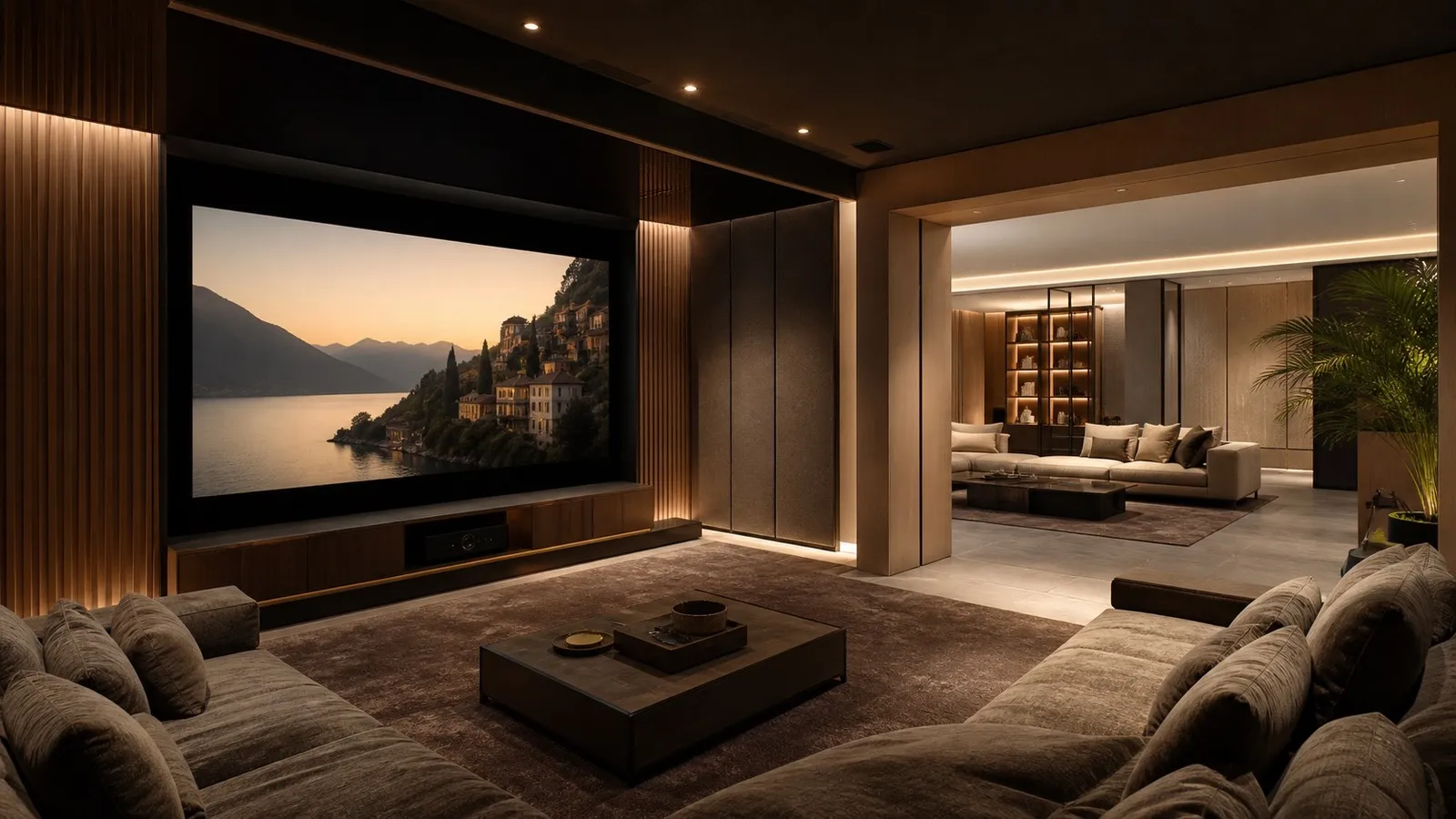
Choosing between a dedicated cinema room and a living-room home theater is not only a budget question. It is a question of lifestyle, architecture and control. Both can work in a premium Italian home, but they solve different problems. A dedicated room prioritizes performance and immersion. A living-room system prioritizes flexibility and integration with daily life.
For international owners, the choice often comes up during a purchase or renovation. A villa may have a basement, guest area or secondary lounge that could become a cinema. A city apartment or penthouse may have no spare room, but a large living area with the potential for discreet AV. The right answer depends on the property, not on a generic hierarchy.
The issue: cinema performance or living-room flexibility
A dedicated cinema room has one clear purpose. Seating faces the screen, light is controlled, speaker positions are planned, acoustic treatment can be integrated and the room can be isolated from the rest of the house. That clarity produces more predictable results.
A living-room home theater has to remain a living room. It may need to support conversation, art, views, family use, dining, a fireplace or direct access to the terrace. The system should appear when needed and disappear when not in use. This is more complex than simply hiding speakers; it requires real design discipline.
The first question is how central the viewing experience is. If films, sport or gaming are a major part of the household routine, a dedicated room deserves priority. If the goal is high-quality casual viewing in the main social space, a living-room system may be the more intelligent investment.
Noise, light and environmental control
Environmental control separates the two options. In a dedicated room, it is easier to manage doors, ventilation, lighting, surfaces and acoustic isolation. In a living room, the design must work around daylight, glass, open spaces, reflective floors and architectural features.
Light is a major practical issue in Italy, where premium homes often make the most of views, terraces and large openings. A living-room screen may need motorized blinds, careful orientation and material choices that reduce reflections. A dedicated room can be darker and more controlled by design.
Noise matters in both directions. The cinema should not disturb bedrooms, neighbors or outdoor areas; the room should also be protected from kitchens, stairs, mechanical systems and household activity. In an open living room, control will always be partial. In a dedicated room, it can be planned more rigorously.
Screen, speakers and shared interiors
In a dedicated room, the screen can define the main wall. In a living room, it must coexist with joinery, art, windows, a fireplace or a view. Sometimes a retractable projection screen works well. Sometimes a large display is cleaner. The decision should consider light, distance, maintenance and the architectural role of the screen.
Speaker placement is equally important. A dedicated room can often use more controlled positions, including speakers behind an acoustically transparent screen or integrated height channels. A living room often needs discreet or built-in solutions, but discretion should not destroy geometry. Dolby advises viewers to face the screen directly and be close to the centerline where practical; that principle is easy to forget in a large social room.
Furniture also affects performance. Sofas, rugs, tables, shelving and wall finishes change reflections, absorption and sightlines. The best projects involve the interior designer and AV integrator before furniture and millwork are finalized.
Cost, timing and construction impact
A dedicated room may seem more expensive because it requires a specific space, finishes and acoustic work. But it can also reduce the need for complex hiding mechanisms or compromises. The cost is concentrated in one environment, with clear technical priorities.
A living-room home theater uses a space that already matters to the home, but integration can be demanding. Custom cabinetry, invisible speakers, lift mechanisms, blinds, lighting scenes and aesthetic coordination can add cost. The work also affects one of the most visible rooms in the property.
Timing is critical. If the decision is made after ceilings, walls and joinery are closed, both options suffer. The dedicated room loses isolation and cable routes. The living room gains visible compromises. For buyers renovating in Italy, early AV planning is a way to protect both performance and interior quality.
Decision framework for choosing
Use this framework before confirming the brief:
- If cinema use is frequent and important, evaluate a dedicated room first.
- If the main living space must remain bright and representative, define acceptable compromises early.
- If bedrooms or neighboring homes are close, commission an acoustic review before choosing the room.
- If the main seats cannot face the screen directly, reconsider layout, screen position or room choice.
- If technology must be nearly invisible, involve the interior designer before AV equipment is specified.
- If construction is still open, make the decision now rather than after finishes.
Cinema in Casa can compare both routes against the same technical brief. The goal is not to force every property into a cinema room, but to choose the option that matches the way the home in Italy will actually be used.
Continue reading
Related articles on NvisionGroup:
- Dolby Atmos 7.2.4 at home: what channels, subwoofers and height speakers really mean
- Private cinema room in an Italian villa: how to design it properly
- Sound isolation for a private cinema room: what to assess before work starts


