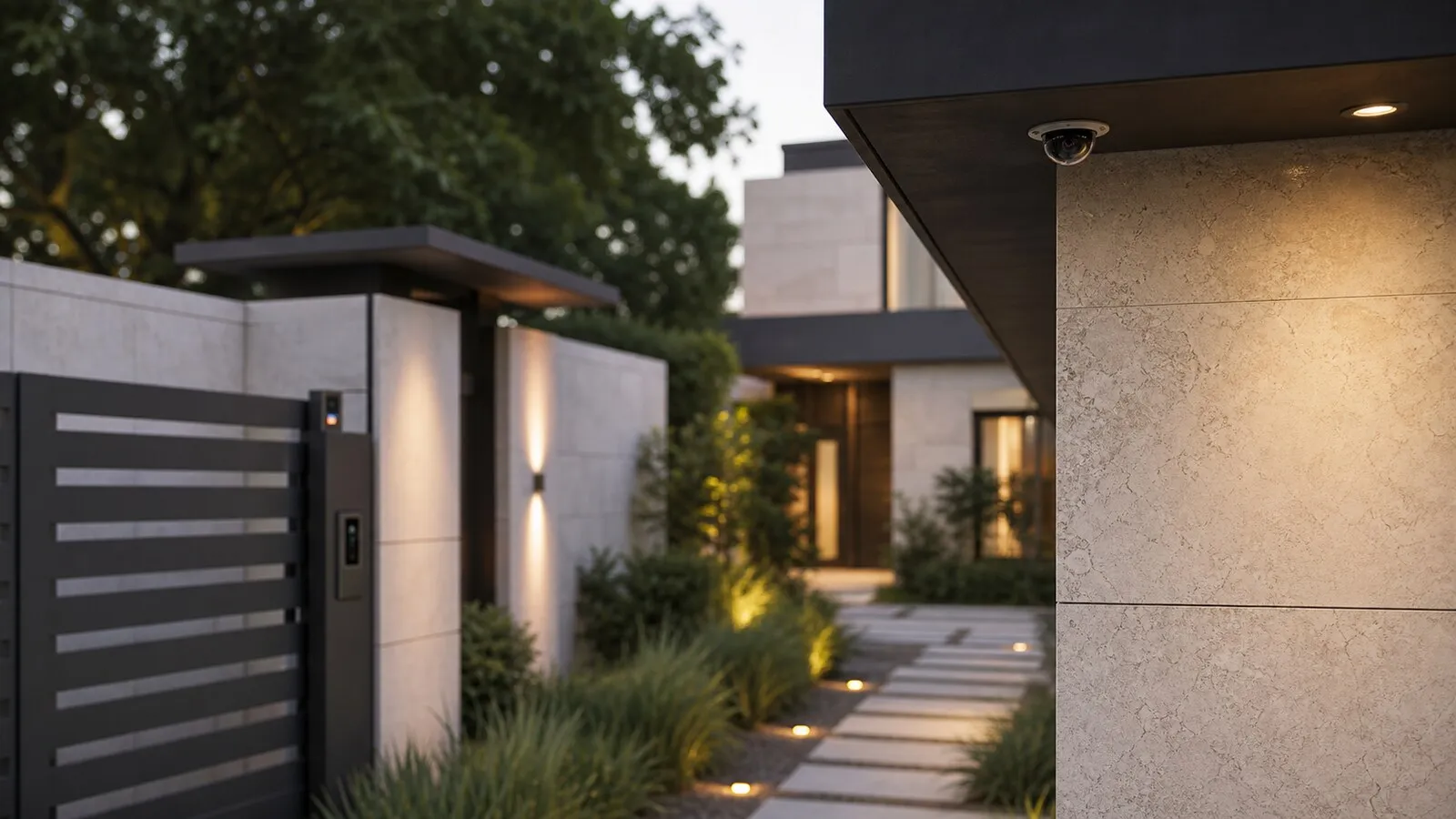
Video surveillance in a premium home is not measured by the number of cameras. It is measured by the quality of the decisions behind them: what needs to be checked, who may access images, how recording is managed, how the network supports the system and how discreetly the technology sits within the architecture.
For international owners buying or renovating in Italy, surveillance also affects remote management. The owner may be abroad when a delivery, maintenance visit or unusual event occurs. The system should help trusted people understand the situation without creating unnecessary exposure or complexity.
The issue: more cameras do not mean more control
Adding devices is easy; gaining control is harder. A poorly considered camera can produce images that are not useful, excessive notifications or a visible intrusion into the architectural language of the house. In a high-end private residence, technology should support the living experience rather than dominate it.
The first question is not “how many cameras do we need”, but “which decisions should the images support”. Confirming an entrance, reviewing an event, helping a property manager, supporting a delivery or checking an external area are different objectives with different implications for image quality, recording, access and maintenance.
The project should involve the architect, electrical contractor and technology integrator early. A camera touches cabling, lighting, power, network, aesthetics and service access. If it is decided at the end, it often becomes an added object rather than part of the design.
The preliminary phase should also include future management. Residents need simple ways to view what matters; administrators need controlled access to users, recordings and support. These two levels should not be confused. Daily use stays simple, while the technical layer remains protected and documented.
Privacy, boundaries and sensitive areas
Camera placement must be designed with attention to privacy and property boundaries. Applicable privacy rules should be respected, and specific legal assessment may be needed in sensitive contexts. A design article can frame the issue; it cannot replace formal legal or compliance advice.
Sensitive areas need separate consideration. Private spaces, guest areas, staff zones, neighbours’ boundaries and service paths should not be treated as one generic surface to monitor. Different areas may require different levels of visibility, responsibility and access.
Users also need to be defined. Owners, family members, domestic staff, property managers, security providers and technicians do not necessarily need the same access to live views, recordings or administration. Credential management is a substantial part of operational privacy.
Views, night lighting and coverage
A good camera view should not be described publicly as a vulnerability map. At design level, however, it is essential to decide which entrances, paths and service areas should be readable and which details are unnecessary. Useful coverage comes from objectives, not from overlapping images by default.
Night lighting is often as important as the camera. Exterior lights, reflections, light surfaces, planting and seasonal changes affect results. Video surveillance and lighting design should therefore be coordinated early, especially around gardens, porches, gates, garages and driveways.
Visual discretion matters. Brackets, junctions, colour, cable routes and service access should be resolved before installation. A camera that looks elegant but is difficult to maintain creates a problem for the future owner.
Italian homes often include stone, timber, mature planting, historic facades or carefully designed exterior lighting. In those contexts, integration may require samples and site checks. Choosing a smaller camera is not always enough; support details, cable routes and visual height often matter more.
Network, recording and secure access
Cameras are network devices. They need stable power, orderly cabling, adequate bandwidth and a proportionate recording strategy. In a smart home they should not depend on improvised connections or undocumented equipment.
Recording should answer a practical question: which events may need to be reviewed, and by whom. Retention, image quality and availability depend on the project, applicable constraints and the management model for the home. Collecting everything indefinitely is not a design principle; having usable information when needed is.
Remote access should be governed. Apps, portals, technical accounts and support access need authorised users, periodic review and revocation when roles change. This is especially important for owners abroad, because support often involves several trusted people in Italy.
The network should support the surveillance system without becoming incomprehensible. Segmentation, power and monitoring need balance: enough structure for security and maintenance, enough simplicity for a trusted service partner to intervene without rediscovering the installation.
Commissioning should also remain process-focused, not operationally revealing. The team can confirm that views support the stated objectives, that quality is coherent in expected conditions, that user profiles are correct and that the owner knows who handles support or exports. For a home managed by a property manager, it helps to separate daily viewing, administration and technical support. Final documentation should record principal equipment, responsibilities, user review criteria and a maintenance cadence, without becoming a public security manual.
Checklist before installation
- Define the purpose of each image before choosing cameras.
- Review privacy, boundaries and sensitive areas as part of design.
- Coordinate cameras with lighting, network, power and architectural finishes.
- Decide who may view, export or administer images.
- Document cabling, power, devices and support procedures.
- Plan periodic checks for cleanliness, updates and image quality.
Lastech designs video surveillance as a discreet, documented infrastructure. Within NvisionGroup projects, the work is to coordinate security, architecture and property management so the home remains protected without losing privacy, proportion and ease of use.
Continue reading
Related articles on NvisionGroup:
- Access control in a private residence: gates, doors and scenes
- Intrusion systems for smart villas: integration without fragile automation
- Network, security and resilience: the invisible base of a smart home


